

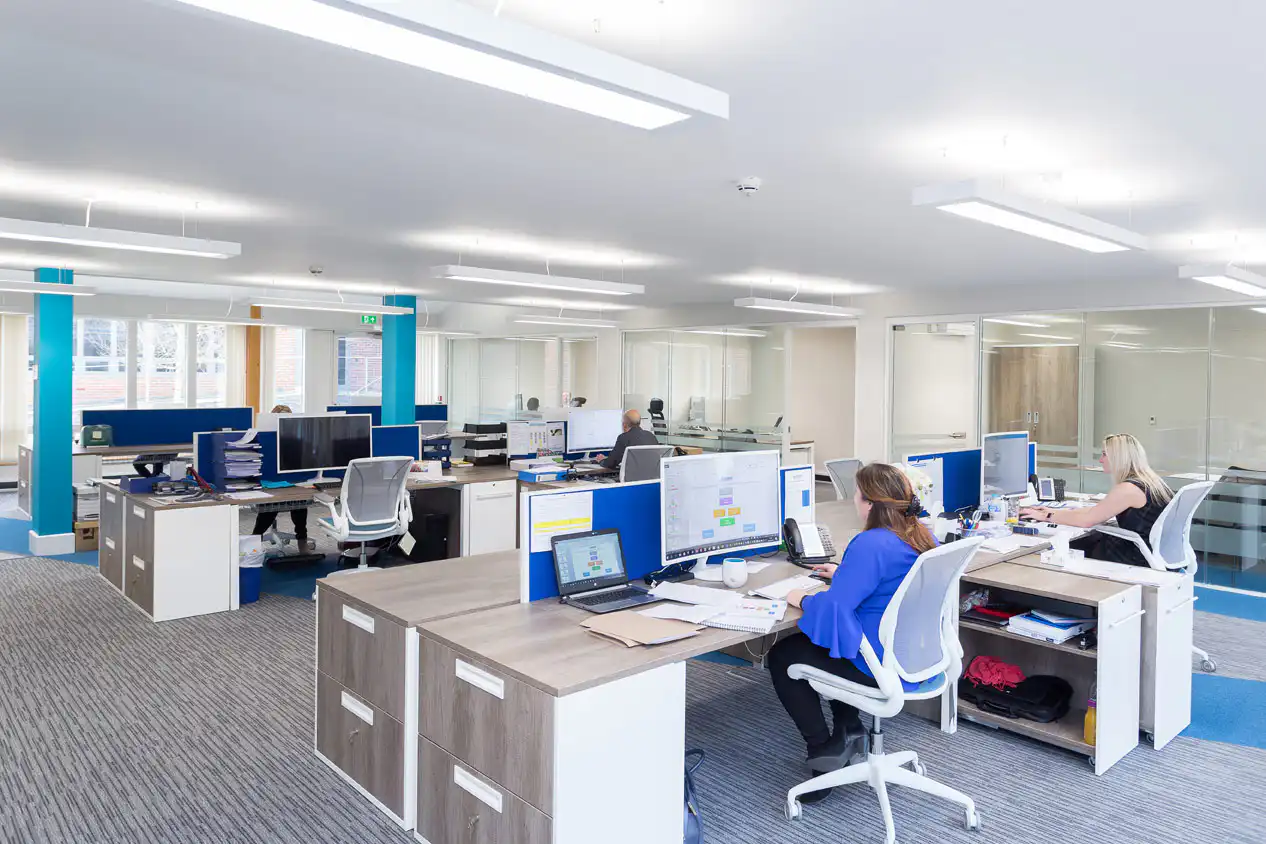
Open‑plan offices can be brilliant for collaboration, but they’re not always kind to your ears. Noise quickly becomes one of the biggest complaints, and over time it chips away at focus, productivity and staff wellbeing. The good news is that thoughtful office design can bring sound under control without killing the buzz of a busy workspace.
Why office acoustics matter
In open‑plan environments, unwanted noise and lack of privacy are consistently cited as major sources of dissatisfaction and reduced performance. Studies of open offices show that speech noise in particular makes it harder to concentrate, increases stress and can even lead to more sick days. When you multiply that across an entire team, poor acoustics quietly become a very expensive problem.
At Bluespace, we see acoustics as a core part of intelligent workplace design, not an afterthought. A well‑designed space balances collaboration and focus so your people can do their best work without feeling overwhelmed by noise.
Common noise problems in open‑plan offices
Most noisy offices suffer from a mix of underlying issues. The main culprits are:
- Constant background chatter
With few physical barriers, conversations travel much further than intended, especially in open plans with long sightlines. Even when the office does not feel “loud”, intelligible speech from across the room is highly distracting for focused work. - Echo and reverberation
Modern offices often favour hard surfaces such as exposed concrete, glass partitions, hard ceilings and minimalist finishes. These reflect sound rather than absorbing it, creating echo and a “hard” acoustic where noise seems to hang in the air. - Lack of privacy
Without acoustic separation, sensitive conversations, HR discussions and phone calls feel exposed. Staff may end up looking for empty meeting rooms just to make a quick call, which is inefficient and frustrating. - Impact noise and hotspots
Footsteps on hard floors, chairs scraping, clattering cutlery in the kitchen and noisy printers all contribute to a general background din. When these noisy activities sit right next to desks, they quickly become a daily irritation.
The aim is not to create a silent library. The goal is a controlled, comfortable sound environment where people can talk, collaborate and concentrate without constantly fighting noise.
How design makes offices quieter
Tackling acoustics effectively is about layering several solutions. The right mix depends on your space, but four elements usually do the heavy lifting: partitions, ceilings, flooring and furniture.
1. Acoustic partitions and zoning
Acoustic partitions and screens are one of the most effective ways to manage sound in open offices.
- They help block and absorb sound, reducing how far conversations and phone calls travel across the floorplate.
- Full height or part height acoustic partitions can create quiet focus zones, semi enclosed collaboration areas and corridors that keep circulation away from deep work desks.
- Freestanding acoustic screens around banks of desks or between teams add separation without the cost of full build outs.
Used well, partitions allow you to keep an open, connected environment while giving people more control over how much noise reaches them. At Bluespace, we often combine space planning with targeted acoustic screens to create clear zones for focus work, collaboration and socialising.
2. Ceiling rafts and baffles
Acoustic ceiling rafts and baffles are suspended panels that sit beneath the main ceiling and soak up sound before it can bounce back into the room.
They are especially powerful in spaces with:
- High or exposed ceilings
- Lots of hard surfaces and glass
- Limited wall area for acoustic panels
By improving sound absorption overhead, ceiling rafts reduce echo, improve speech clarity and make conversations less tiring. Staff no longer have to raise their voices to be heard, which lowers vocal strain and helps keep stress levels down. Rafts can also be specified in different shapes, colours and sizes, so they become a design feature in their own right rather than looking like a bolt on fix.
3. Flooring and finishes
The surfaces underfoot have a big impact on how sound behaves in your office.
- Hard surfaces such as vinyl, timber or polished concrete reflect sound and transmit impact noise, for example footsteps and chair movements.
- Carpet tiles, acoustic underlays and strategically placed rugs absorb a significant portion of this energy, making the space feel calmer.
A clever approach is to use softer finishes on main circulation routes and under workstations, while keeping more durable options in kitchens or high spill areas. This kind of zoning helps keep impact noise away from desks, without compromising practicality. As part of a refurbishment, Bluespace can review your existing finishes and specify a combination that improves acoustics as well as aesthetics and durability.
4. Furniture and soft elements
Furniture choices and soft furnishings play a bigger role in office acoustics than many people realise.
- High back sofas, acoustic booths and pods create pockets of privacy for calls and small meetings, while absorbing sound instead of bouncing it back into the room.
- Upholstered seating, fabric fronted storage and soft screens between desks all contribute to overall sound absorption.
- Acoustic wall panels and baffles can double as branded features or artwork, improving the look of the space while quietly doing the acoustic heavy lifting.
This is where design led solutions really shine: your office can feel softer and more welcoming, align with your brand and work better acoustically at the same time.
A quick acoustic health check
If you are unsure whether acoustics are holding your workspace back, ask yourself:
- Can you clearly follow a conversation happening more than 10 metres away?
- Do video calls or phone calls regularly disturb people sitting nearby?
- Does the space sound “echoey” or harsh when the office is busy?
- Are staff using meeting rooms just to escape noise for focus work?
If you are answering “yes” to any of these, your office is likely suffering from poor speech privacy and insufficient sound absorption, both of which are fixable with the right mix of zoning, partitions, ceilings, flooring and furniture.
Ready for a quieter, more productive workspace?
Every building behaves differently acoustically, so the most effective solution is always tailored. A considered design approach can turn a noisy, distracting open plan into a workspace that supports both collaboration and deep focus.
If you are a business in Norwich or across East Anglia and you would like to improve office acoustics, whether as part of a full fit out or a light touch refurbishment, Bluespace can help you assess your current space and design a solution that looks good and sounds even better.